When a garage door fails at 11 p.m. during a sleet storm, it stops being a convenience and becomes a security problem. I have stood in driveways where a half-open door left a sedan trapped, a dog nervous, and a homeowner weighing risk in minutes: leave the door stuck and hope for the best, or try to force it and risk a snapped spring that could whip like a steel cable. Emergencies do not respect business hours, which is why 24/7 garage door repair exists. Understanding how it works will help you decide when to call, what to expect from a garage door repair company after dark, and how to protect your driveway and your budget.
What makes a garage door an emergency
Not every stuck door merits a midnight visit. That said, certain failures bring real urgency. A door jammed halfway can keep you from medical appointments or work shifts. A broken torsion spring can turn a heavy panel into a dead weight that two adults can barely lift. When an opener stalls with the door open, your garage becomes an invitation. I have seen neighborhood break-ins follow an open door by just a few hours.
The most common after-hours triggers fall into a few patterns. Springs break with a sharp pop and the door refuses to lift. Cables fray unseen, then unravel and bird’s nest around the drum. Rollers hop off a bent track after the car bumper taps the bottom panel. Openers blow a capacitor during a summer brownout. And occasionally, a photo-eye falls out of alignment and stops an otherwise healthy system, which is the one scenario many homeowners can solve without help.
If the door is stuck but secure, and you have other ways to leave the house, many reputable teams will suggest waiting until morning to keep costs down. When a door is off the track, half-open, or held only by the opener, the right move is often an immediate call. The motor is not designed to carry the door’s full weight, and forcing it can fry gears or crack the chassis.
What 24/7 actually means in practice
The phrase gets used loosely, and different regions run different playbooks. For some companies, 24/7 garage door repair means a live dispatcher at all hours who can triage issues, quote an emergency service fee, and dispatch a tech within a set window. In other places, it means an on-call rotation among a small crew who cover nights and weekends, with response times ranging from one to four hours depending on how spread out the territory is.
Two standards tend to separate the reliable outfits from the advertising noise. First, the company answers the phone with a trained coordinator who knows garage doors, not a generic answering service. That person can walk you through the emergency release cord, ask the right questions about spring leads and track alignment, and determine whether same day garage door repair is realistic or whether you need a temporary securement and a follow-up during daylight. Second, the field technician arrives in a stocked truck. After-hours calls should not turn into late-night parts shopping runs.
Expect a surcharge. Night and holiday work requires on-call pay, safety protocols, and sometimes a two-person crew. The premium usually shows up as a flat emergency fee plus normal labor and parts. Good companies explain these numbers before the truck rolls.
How dispatch triage works
A strong dispatcher acts like an ER nurse for garage doors, deciding who gets the first bay. The triage questions tend to be crisp and specific. Is the door fully open, fully closed, or stuck mid travel? Do you see a gap in the torsion spring above the door, usually centered over the header? Are the lift cables taut on both sides or slack on one drum? Is the opener attempting to move the door, or does it just click and hum? Did the problem start after a power surge, a bump from the car, or a weather event?
Honest triage can save you money at 1 a.m. If a photo-eye is blinking, the stop might be a misalignment, a spider web, or sunlight glare that lingered into dusk. The fix can be a wipe and a nudge. If the opener’s trolley is disengaged, pulling the red release cord forward and back while the door is closed can reset it. Dispatchers at a competent garage door repair company will walk you through these quick checks. When the call still merits a visit, they set expectations about arrival time and probable scope.
What a night service truck carries
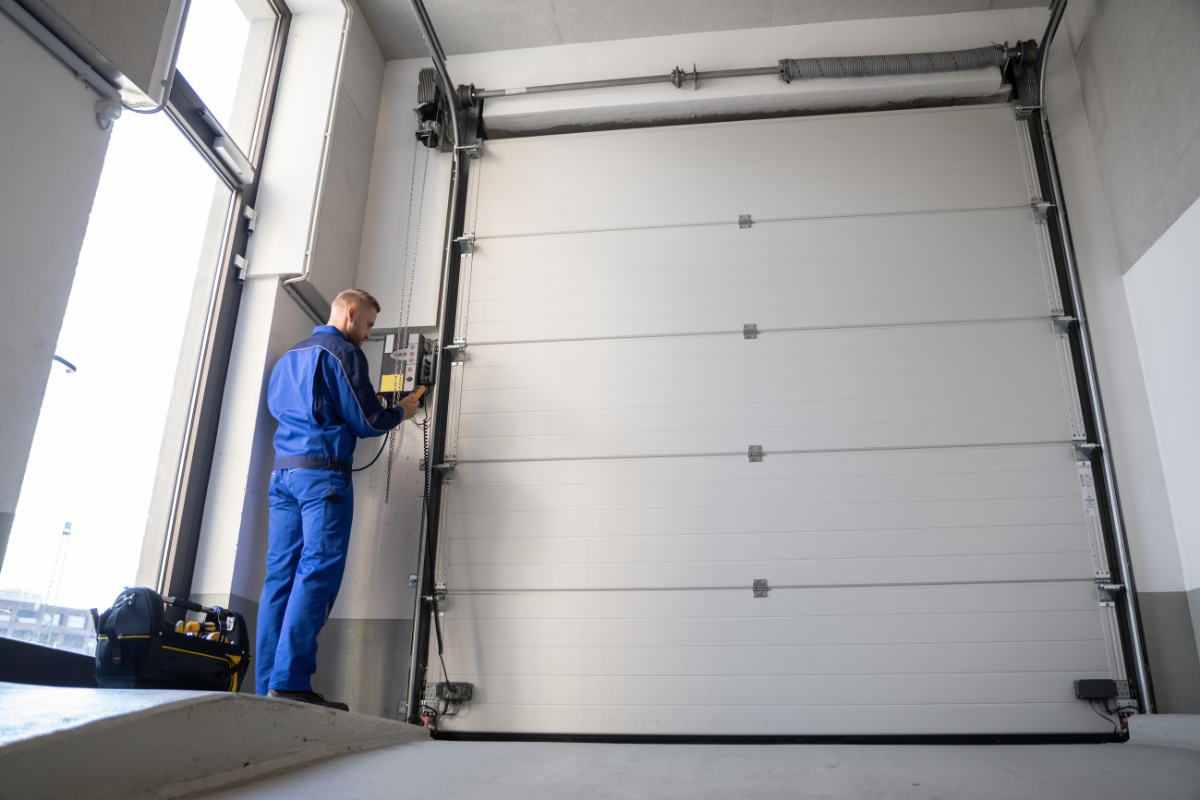
Tools and parts matter because you only want to open the door once. In my rigs, the staples looked like a compact warehouse: a range of torsion springs with wire sizes from .192 to .295 inch and lengths that allow on-site winding to match door balance, extension springs for common seven and eight-foot doors, sets of 14-gauge and 16-gauge hinges, a variety of 2-inch and 3-inch rollers, pairs of lift cables in standard lengths, drums for right and left wind, end and center bearings, track brackets, couplers, winding bars, impact drivers, and adjustable wrenches.
For openers, we stocked logic boards for popular models, standard capacitors, limit switches, photo-eyes, safety brackets, and a few belt and chain assemblies. We also carried temporary bracing material so we could secure a compromised door overnight when a full repair would take longer or required specialty sections. A good garage door supplier backs this inventory with late cutoff times and local availability, but at midnight, the truck inventory is your best friend.
The anatomy of an after-hours call
Picture a split-level home on a cul-de-sac, midwinter. The homeowner tried to leave for a 5 a.m. airport run. The opener raised the door a foot before stalling, then reversed. He pulled the emergency release and tried to lift, and the door felt welded down. When I arrived, a fat torsion spring sat in two pieces, a gap of two inches between coils. The cables were intact and still on the drums. The opener was fine, but it had no chance of lifting a 200-pound door without spring assist.
First step, secure the door. I slid a heavy pry bar under the bottom section, lifted enough to relieve force on the rollers, and clamped vice grips to the tracks just above the second roller on both sides to keep the door from moving. With the door immobilized, I loosened set screws on the broken spring’s winding cone and removed the old spring. I measured the door width, height, weight, and drum diameter, then matched a spring from the truck that would balance the door within a few pounds at the open and closed positions. After installing and winding the new spring to the correct turns, I adjusted cable tension evenly, removed the clamps, and performed a balance test by hand. The door stayed at mid travel without drifting, which told me the spring rate was correct. Only then did I reengage the opener and run a force and limit calibration.
From the knock to the cleanup, the repair took under 90 minutes. The homeowner made the flight. The emergency fee covered the on-call cost; the parts and labor were standard. This is the ideal scenario: a defined failure, a stocked truck, a clear fix.
Safety choices when the door has left the tracks
Not every call ends that cleanly. Off-track doors at night create a jungle of risk. I once arrived to a bent right track where a teen had clipped the lowest panel with the bumper and pushed the bottom bracket inside the jamb. The cable on that side had slackened and jumped the drum. The door leaned out of plumb. The worst move is to put the opener to work anyway. It will try to drag a crooked door through a straight path, often bending the top section or tearing hinges.
The safe after-hours play often involves controlled disassembly. Clamp, shore, and relieve tension in a measured order. If the panel is creased or the stile torn, the repair might require a replacement section, which cannot be conjured at 2 a.m. In those cases, the right call is to secure the opening with temporary bracing or plywood and return with the correct panel during daylight. Most homeowners accept this when you explain the cost of forcing a full repair at night with the wrong parts: it risks collateral damage that balloons the bill.
Forces at work and why they matter
Garage doors are heavy, but weight alone does not tell the whole story. The torsion springs convert torque into a counterbalance that makes a 180-pound door feel like 10 to 20 pounds at the handle. The cables lift evenly on both sides, guided by drums with a specific diameter and pitch. The opener is a convenience device that nudges a balanced door along. When the spring breaks or cable tension becomes uneven, the balance disappears. The opener then sees a load it was never designed to bear.
Force settings on modern openers include safety reverse thresholds. In cold weather, grease thickens and adds drag, sometimes raising the perceived force just enough to trigger a reversal. Photo-eyes send a beam across the width of the door near the floor. If misaligned, they block closure and blink a diagnostic code. Knowing these elements helps you understand dispatcher questions and why a technician insists on manual balance checks before touching the opener. It is not superstition; it is physics.
Pricing models and how to keep them honest
Emergency rates vary by city, but patterns repeat. Night calls generally include a base emergency fee that covers after-hours staffing and priority dispatch. Labor might be billed in 15-minute increments with a one-hour minimum. Parts, especially springs and logic boards, carry standard pricing. If you live far from the service area, a travel charge may apply.
You cannot control the time the spring decides to break, but you can control surprises. Ask for ranges over the phone: emergency fee, typical labor for your issue, likely parts. A reputable garage door repair company will give you a ballpark and clarify when the price could swing up or down. For example, a simple spring swap on a standard seven-foot door usually falls within a narrow band. A two-spring system on an eight-foot insulated door takes longer. An opener replacement at 3 a.m. might be possible if the model on the truck fits your door and your ceiling setup, but wiring complications could push the job into daylight.
Be cautious of rock-bottom quotes for after-hours service. A company cannot pay a competent tech to drive across town, carry insurance, and work safely in the dark for the price of a daytime tune-up. On the other hand, a bill that doubles typical daytime rates without explanation deserves pushback. Transparency is the filter you can use. If the pricing conversation feels opaque, consider calling another provider that shows up in reputable search results for garage door repair near me and comparing notes before you commit.
What homeowners can do before the tech arrives
Some simple steps can make your night smoother. Keep the area around the door clear. Move vehicles if the door is open and the car can be backed out safely. Keep kids and pets away fr